JAPAN SUSTAINABLE SEAFOOD AWARD 2026
FINALISTS
The 7th Japan Sustainable Seafood Award Finalists
 Japan Category Finalists
This category is for projects implemented by organizations or individuals based in Japan. Projects were reviewed comprehensively, whether implemented independently or in collaboration with other organizations or individuals.

Farmer You Project
Farmer You
Farmer You collaborates with producers, restaurants and local governments to co-develop commercially viable projects that address local food and environmental challenges.
Overgrazing by the mottled spinefoot (Siganus fuscescens), a species of little commercial value, is considered a cause of algal- and seagrass-bed loss around Tsushima, a group of small islands in Nagasaki Prefecture. The red stingray (Hemitrygon akajei) damages fishing gear and has often been culled by fishers operating in the Tokyo Bay, mostly to be discarded as the commercial demand is very limited. Seeing potential in these species, the project collaboratively turns them into commercially valuable seafood products: catch is collected from local fishers and processed at a centralized hub, while Farmer You coordinates business planning, product development and sales-channel development.
Mottled spinefoot is locally called “bari” in the Tsushima area. Farmer You has worked with Marutoku Suisan, a local seafood processor, to develop frozen mottled spinefoot cutlets. Specially prepared and seasoned to reduce smell and then breaded, these cutlets are sold under the name Bari Katsu, and are served at restaurants across Japan. 2,500 to 3,000 cutlets are now being sold every month. Farmer You also works with Hamatake Suisan to commercialize products made of culled red stingray to reduce waste.
Through collaborative initiatives tailored to different species and local areas, the project aims to build local models that allow both the creation of new income sources for local fishers and coastal conservation. Farmer You hopes to address challenges in satoyama areas (woodland between mountain foothills and residential or farming areas) as well in the future.
Further information
Community-led Initiative to Restore Algal and Seagrass Beds: Nature-positive Actions by the Fishers of Kushiura
BLUE REVIVE
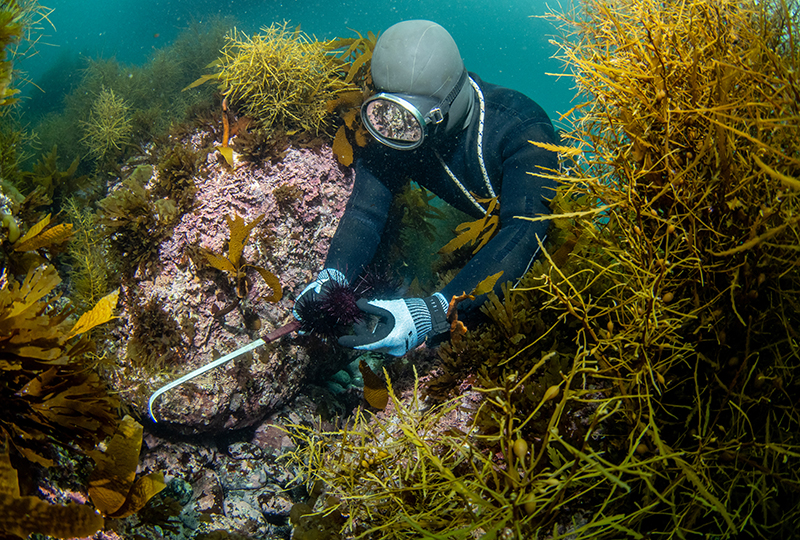
Since the 2000s, rising sea temperatures and an increase in the number of grazing marine organisms has worsened marine desertification (“isoyake”) in Kushiura, Saga. With the loss of algal and seagrass beds, which provide spawning and nursery habitats for marine life, local catches also plummeted. Blue Revive builds on more than 20 years of fieldwork led by fisher Shozo Kesamaru to restore these algal and seagrass beds and local fisheries.
This project is a collaboration with local fishers, residents, schools, universities, businesses and the local city government of Karatsu. For over two decades, the project has controlled the density of long-spined sea urchins (Diadema setosum), planted a common brown algae species called “kurome” (Ecklonia kurome) and eelgrass, continued scientific monitoring, and provided hands-on learning programs for children. From FY2022 to 2025, the project received carbon credits from the J Blue Credit scheme for the removal of a cumulative total of 116.3 t-CO₂. In addition, the scientific monitoring program has been institutionalized by the city of Karatsu through collaboration with Tohoku University. Furthermore, the project-implementation area has been certified by the Ministry of the Environment of Japan as a site contributing to the achievement of 30by30.
Through another collaborative initiative for the conservation of underwater forests, as well as a study group on nature finance established in January 2026, Blue Revive is conducting a study to demonstrate mechanisms that visualize the value of algal and seagrass beds (and other marine ecosystems) to leverage this in marine-environment restoration and local economy stimulation. Blue Revive aims to restore damaged fishing grounds, facilitate environmental education and generate income for local fishers, and ultimately apply the project methodology to other areas in Japan.
Further information
Yamakawa “Mother Sea” – Ibusuki Blue Carbon
Yamakawa Fisheries Cooperative Association
The southern limit of Japan's eelgrass beds lies in the coastal waters of Yamakawa, Kagoshima. Eelgrass beds are spawning and nursery habitats for marine organisms and are sometimes called the “cradle of life.” As eelgrass captures CO₂ through photosynthesis, these beds store blue carbon as well. In recent years, however, environmental changes and overgrazing by herbivorous fish have led to the loss of eelgrass beds, making their restoration and conservation a local priority.
Led by the Yamakawa Fisheries Cooperative Association, the project brings together local businesses, schools, universities and research institutions to collect eelgrass seeds and plant them on biodegradable mats underwater. To date, 89 mats covering a total of 445 m² have been installed, and the eelgrass bed area has expanded to approximately 1,500 m². Environmental education activities are also jointly conducted. In FY2023, the area was certified by the Ministry of the Environment of Japan as a site contributing to the achievement of 30by30. In FY2025, it received carbon credits from the J Blue Credit scheme for the removal of 1.4 t-CO₂ (which is a 1.0 t-CO₂ increase from the previous fiscal year).
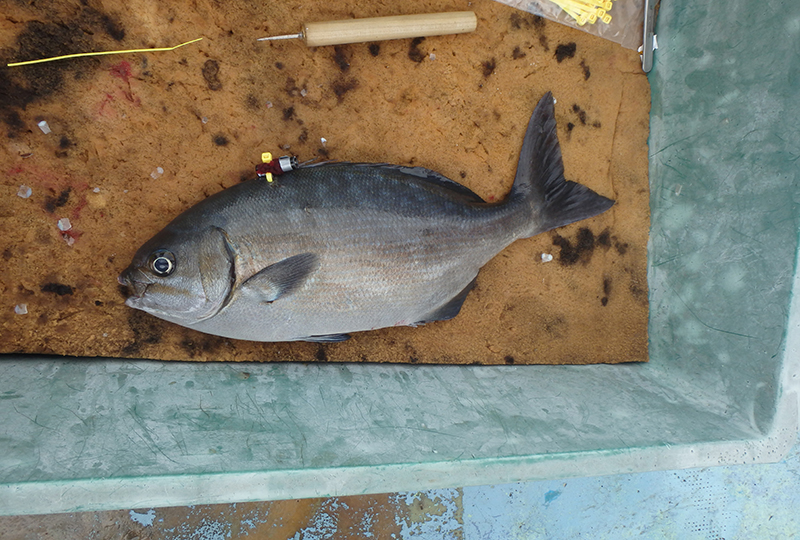
Furthermore, as overgrazing by brassy chub (Kyphosus vaigiensis) is becoming increasingly problematic, in 2026, the project started a field study using biotelemetry. By tracking the behavior of individual fish, the study aims to enable effective grazing control and fish-population management. Moreover, bento meals using the meat of the culled brassy chub are on the way to commercialization, potentially creating a new income source for local fishers. Science-based grazing control and the utilization of culled fish are combined to achieve both habitat conservation and local-economy stimulation.
Further information
 Asia Category Finalists
This category is for projects implemented by organizations or individuals based in Asia (excluding Japan). Projects were reviewed comprehensively, whether implemented independently or in collaboration with other organizations or individuals.
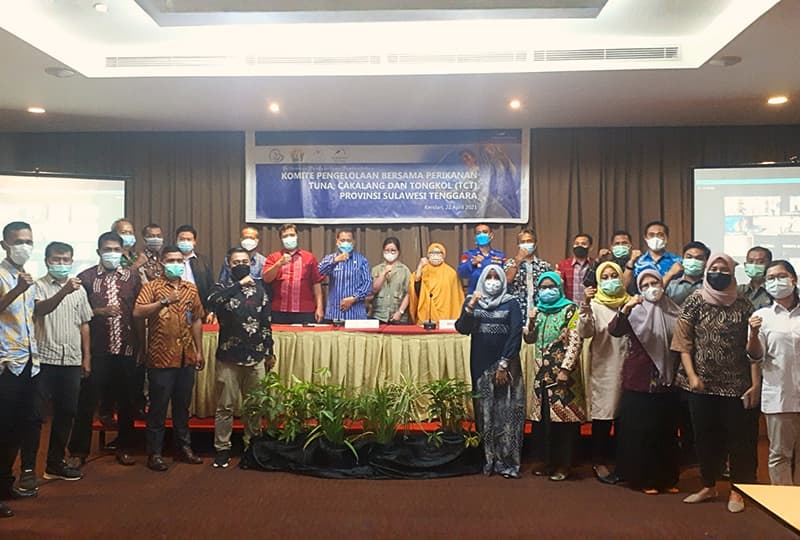
Transforming Indonesia's Small-Scale Tuna Fisheries Through Digital Traceability and Collaboration
Indonesia Pole & Line and Handline Tuna Association (AP2HI)
Although pole-and-line and handline fishing are widely recognized as environmentally responsible fishing methods, operators were only able to show limited transparency and had less market access, due to fragmented supply chains, limited digital infrastructure, inconsistent catch documentation and weak traceability. Thus, there was a need for more resilient, technology-enabled monitoring systems, which was further highlighted during the COVID-19 pandemic. The Indonesia Pole & Line and Handline Tuna Association (AP2HI) therefore collaborated with small-scale one-by-one tuna fisheries in Eastern Indonesia to strengthen catch documentation, traceability, data collection and responsible fishing practices by implementing digital innovation.
From 2020 to 2021, AP2HI worked with government, industry and technology partners to establish an end-to-end traceability system combining vessel tracking devices, time-lapse cameras, electronic logbooks and port-based data collection. The project mapped the coordinates of 93 anchored fish aggregating devices (FADs) and 14 lift nets for regulatory submission, while supporting training on post-harvest handling, identification of endangered, threatened and protected (ETP) species, legal vessel registration and implementation of AP2HI's industry Code of Conduct.
The project supported AP2HI's broader sustainability efforts, during which its member fisheries achieved MSC certification in 2021. Building on the project, in 2025, AP2HI launched Blue Catch, an industry-led digital traceability platform designed to meet the Global Dialogue on Seafood Traceability (GDST) standards. AP2HI continues to collaborate with the Ministry of Marine Affairs and Fisheries (MMAF) of Indonesia as well, by feeding FAD spatial data into the Database of Indonesian Vessels Authorized to Fish Tuna (DIVA-TUNA) and supporting the national Seafood Traceability System (STELINA), extending the project's legacy through stronger traceability, fisheries governance and market confidence.
Further information
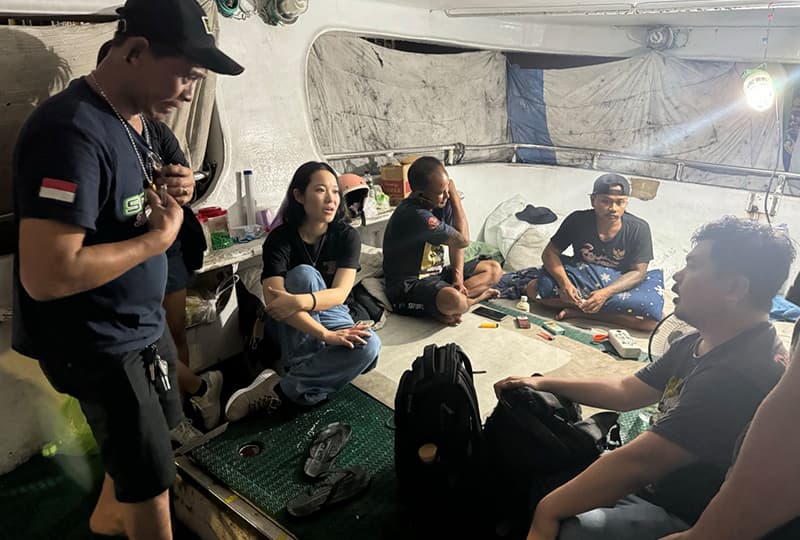
From Deck to Policy: Bottom-Up Civil Society Advocacy for an Inclusive Regional Framework to Protect Migrant Fishers in and beyond ASEAN
Human Rights Working Group (HRWG)
In response to the adoption of the ASEAN Declaration on the Placement and Protection of Migrant Fishers at the 42nd ASEAN Summit in May 2023, the Human Rights Working Group (HRWG) and Better Engagement Between East and Southeast Asia (BEBESEA) launched this regional initiative in 2023. The initiative addresses labor exploitation at sea as an issue that spans across illegal, unreported and unregulated (IUU) fishing, business and human rights, and corporate accountability. It aims to ensure that the lived experiences of migrant fishers and their families are reflected in ASEAN policymaking through collective advocacy work.
In August 2023, with a bottom-up, participatory and intersectional approach, a regional consultation brought together 40 participants representing 25 civil society organizations from East and Southeast Asia, including maritime unions, human-rights and migrant-rights NGOs and think-tanks. This resulted in a comprehensive policy paper and a proposed guideline for ASEAN and beyond. From December 2023 to August 2024, members of the initiative engaged in official consultations with stakeholders in the implementation of the Declaration, including the Indonesian government and ASEAN bodies. Key recommendations were reflected in the ASEAN Guidelines on the Placement and Protection of Migrant Fishers (adopted at the 45th ASEAN Summit in October 2024). In October 2025, a workshop in Kuala Lumpur, endorsed and attended by the Chair of the ASEAN Intergovernmental Commission on Human Rights (AICHR), brought together 35 civil society representatives. This workshop helped integrate the protection of migrant fishers into the 6th ASEAN-EU Policy Dialogue on Human Rights.
In its next phase, the initiative will focus on the effective and inclusive implementation of the ASEAN guidelines across ASEAN Member States and their counterparts, while strengthening meaningful engagement with business actors and community-centred human rights due diligence in global seafood supply chains. The long-term goal is to bridge grassroots realities, policy and corporate practices for better accountability and the protection of migrant fishers and their families.
Further information
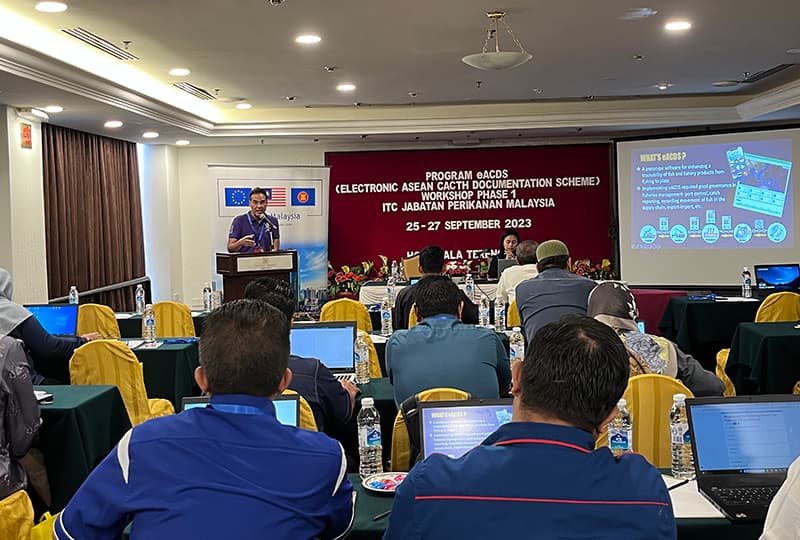
Strengthening Regional Cooperation and Enhancing National Capacities to Eliminate IUU Fishing in Southeast Asia
The Training Department of the Southeast Asian Fisheries Development Center (SEAFDEC/TD)
Illegal, unreported and unregulated (IUU) fishing is a food-security and socioeconomic threat, undermining efforts to conserve, manage and recover fish stocks. Against this background, SEAFDEC/TD, with support from the Japanese Trust Fund (JTF), implemented this project from 2020 to 2024 in collaboration with ASEAN Member States (AMSs). The project addressed systemic vulnerabilities including unauthorized fishing operations, weak inter-agency law enforcement, inadequate port inspections and the lack of unified seafood traceability mechanisms across the region.
The project had three core components: i) the use of the Regional Fishing Vessels Record (RFVR); ii) regional cooperation to support the implementation of Port State Measures (PSM); and iii) the development and implementation of the electronic ASEAN Catch Documentation Scheme (eACDS). By the end of the project, the RFVR was expanded to capture 28 key data elements for 5,370 vessels, over 800 fisheries officers of AMSs received training in Monitor, Control, and Surveillance to combat IUU fishing. Moreover, Viet Nam adopted the eACDS prototype to develop their own digital traceability in seafood supply chains.
Building on this project, SEAFDEC/TD plans to expand the RFVR to vessels under 24 meters, improve traceability systems for commercial and small-scale fisheries serving domestic and export markets, and use its pool of over 800 trained personnel to strengthen national and regional enforcement networks.
Further information
Honorable Mentions
Introducing projects that were particularly recognized during the selection process.
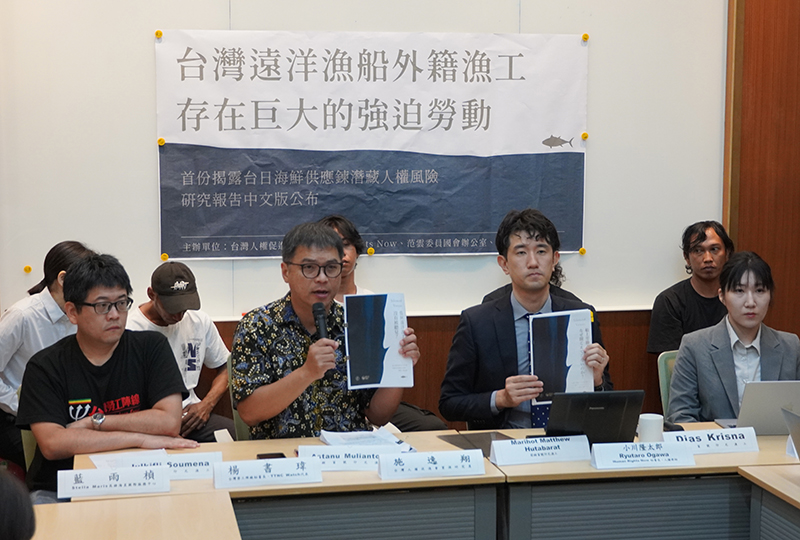
【Japan Category】Investigation of Human Rights Risks Facing Indonesian Migrant Workers in Taiwan’s Distant-Water Fisheries and the Taiwan-Japan Tuna Supply Chain
Human Rights Now (HRN)
Sources have reported that Indonesian migrant workers aboard Taiwanese distant-water fishing vessels have been subjected to forced labor. Much of the sashimi-grade tuna exported from Taiwan in 2024 was destined for Japan, yet the tuna supply chain is complex and opaque, making it difficult to understand human rights risks.
This joint investigation project by Human Rights Now (HRN) and the Taiwan Association for Human Rights (TAHR) conducted the following: interviews with former Indonesian crew members from two Taiwanese distant-water fishing vessels that are suspected of forced labor; an analysis regulatory frameworks in Taiwan and Japan; and a survey sent out to 19 Japanese companies on their responses to human rights risks. In collaboration with the Union of Indonesian Migrant Workers (SBMI), the project also conducted field surveys in Indonesia, including interviews with recruitment agencies, former fishing vessel crew members and local government agencies.
The investigation was able to document long working hours, unpaid wages, confiscation of identity documents and restrictions on communication. It also identified how corporate disclosure of human rights risks and grievance mechanisms for crew members are insufficient. Based on the results, in September 2025, HRN published the report Silenced Voices. The project aims to strengthen cross-border mechanisms to protect migrant workers’ rights through dialogues with the Fisheries Agency of Japan, the Fisheries Agency of Taiwan, and the National Human Rights Commission of Taiwan, as well as webinars for Japanese, Taiwanese and Indonesian organizations.
Further information
【Asia Category】Piloting a Climate Resilient Co-management of Blue Swimming Crab Fisheries in Lampung Province, Indonesia
Environmental Defense Fund (EDF) Indonesia
Since 2017, Environmental Defense Fund (EDF) Indonesia has led a science-based, stakeholder-driven initiative in Lampung Province to pilot sustainable co-management of blue swimming crab fisheries. Blue swimming crab is Indonesia's fourth most valuable seafood export, supporting more than 280,000 fishers and supply-chain workers. However, overfishing, climate change, fragmented governance, inconsistent regulations and limited stakeholder participation have hindered effective fisheries management, placing both marine ecosystems and coastal livelihoods at risk.
To strengthen stakeholder-led co-management and science-based decision-making, EDF Indonesia works with the Marine and Fisheries Agency of Lampung Province, Mitra Bentala (a local NGO), the University of Lampung, fishers and coastal communities. To date, the project has helped lay the foundation for 11 national and provincial fisheries regulations, empowered 60 community groups—including 42 fisher groups, nine community surveillance groups and nine women's groups—and established a fisheries data collection system to support adaptive management and protect critical blue swimming crab habitats.
The project pioneers a co-management model that integrates the co-management of marine protected areas (MPAs) and fisheries management areas (FMAs), placing coastal communities—including women—at the forefront of sustainable fisheries governance and marine stewardship. EDF has secured a significant new five-year funding to institutionalize the model at the provincial level and scale up its impact nationally, with plans to expand climate-resilient fisheries and MPA co-management, strengthen local leadership and livelihoods, and develop a replicable approach for sustainable small-scale fisheries management across Indonesia.
Further information