 Driving the Transition to Sustainable Seafood
IUU fishing, human rights abuses, fisheries resource management,
traceability, biodiversity...fisheries industries are having to navigate significant changes.
Efforts that started at the individual business level have developed to national and regional levels,
and are now evolving into global frameworks.
Mainly focusing on Japan and other parts of Asia,
this timeline shows how the global seafood community has changed over the years.


2025
(11th TSSS) Navigating the Future of a Sustainable Seafood Industry Through Global Collaboration
The FAIRR Initiative (FAIRR), a collaborative investor network,launched the process of assessing material risks and opportunities with 20 major global seafood companies as part of the new Coller FAIRR Seafood Index.
The 77 Bank agreed to financially support MEIHO Gyogyo Co., Ltd. through its 77 Positive Impact Finance program, for which the loan conditions require sustainable fishing practices.
Nissui Corporation signs “Nature Impact Finance” agreement with Sumitomo Mitsui Trust Bank, aiming for 100% sustainable seafood procurement.
The Sustainability Standards Board of Japan (SSBJ) announced the issuance of its sustainability disclosure standards (SSBJ Standards), the first standards of its kind in Japan.
Thai Union secured a USD 150 million loan from the Asian Development Bank (ADB). This is ADB’s first blue loan to the private sector in Thailand.
WWF publishes “Above Board: 2024 Assessment of Banks' Fisheries Sector Policies.” The number of banks taking action in the fisheries industry to manage risks related to environmental destruction and human rights issues is on the rise. The analysis shows that banks in Asia, in particular, have made the most significant progress year-on-year for two consecutive years compared to their counterparts in Europe and the US.
British think tank NGO Planet Tracker released a report titled “Tuna Tuner” on transparency in the tuna and bonito fishing industry. The report analyzes that among the top 30 companies involved in the tuna and bonito distribution industry, several East Asian companies have a high volume of tuna and bonito whose catch and ownership data are unclear, and points out the risks to investors.
The Taskforce on Nature-related Financial Disclosures (TNFD) released its final guidance for the fisheries, maritime transport and cruise ship sectors, along with a discussion paper on ocean governance.
Mitsubishi Corporation established its seafood procurement guidelines. Expanding the scope to all species and promoting sustainability initiatives.
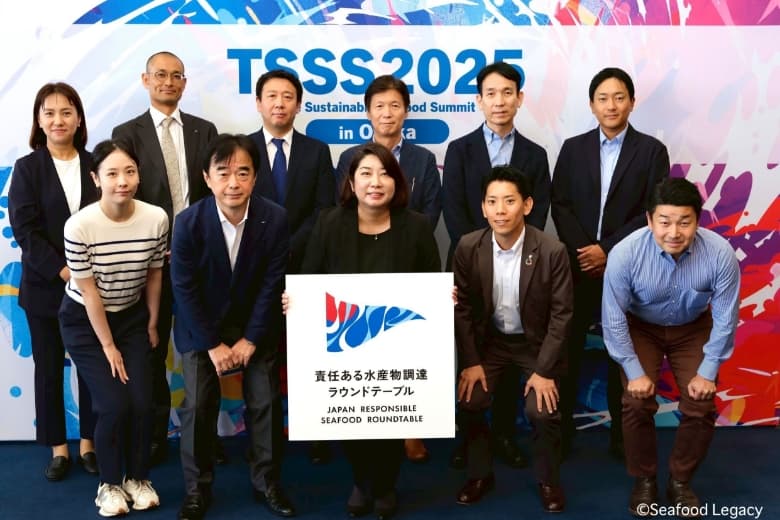
Seafood Legacy Co., Ltd. announced the launch of Japanʼs first “Responsible Seafood Procurement Roundtable(JRSR)” , an initiative that brings together seven leading seafood-related companies in Japan.
Indonesian crew members filed a lawsuit against US seafood giant Bumble Bee Foods over forced labor and human trafficking. This is the first time for an American seafood company to face a lawsuit over working conditions at sea.
MSC (Marine Stewardship Council) announced that 54% of the world's tuna and bonito catch comes from MSC-certified fisheries.
Expo 2025, Osaka, Kansai Japan was held with the theme “Designing Future Society for Our Lives.” It aims to contribute to achieving the SDGs. As the first expo to be held at a venue surrounded by the sea, it has been nicknamed the “marine expo” and hosts numerous sessions and workshops on marine environment protection and the sustainable use of fisheries resources.
The BLUE OCEAN DOME pavilion was opened by ZERI JAPAN within the Expo 2025, Osaka, Kansai Japan site. The focus of this pavilion is the sustainable use of marine resources and the protection of marine ecosystems. In collaboration with The Sustainable Seafood Summit (TSSS) 2025 in Osaka, the “Choose and Protect the Future of Fish week” is taking place at The BLUE OCEAN DOME from September 29 to October 5. (Lead organizer ZERI JAPAN / Collaborator Seafood Legacy Co., Ltd.)
At the Nikkei Blue Ocean Forum, a side event of the 3rd UN Ocean Conference (UNOC3), recommendations for conservation and the sustainable use of the world's oceans, including the establishment of a sustainable system with scientific-data-based digital transformation in the marine industry, were presented.
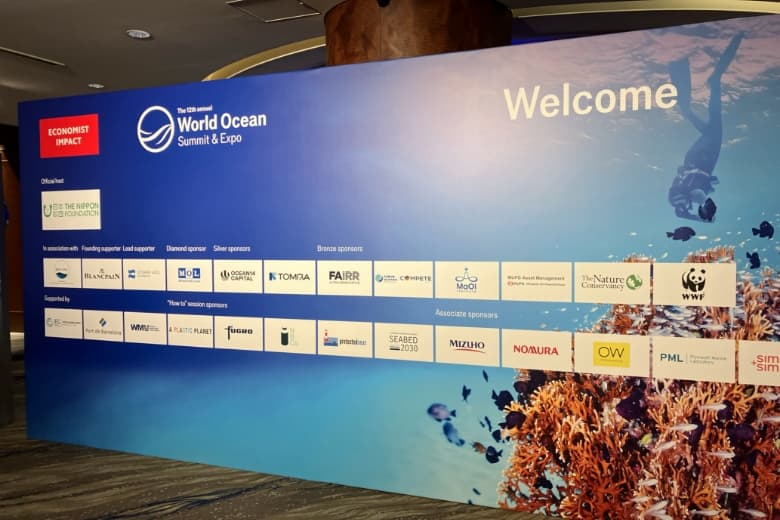
The World Ocean Summit was held in Japan for the first time (also the first time ever in Asia).
ROK (in March), Vietnam, and Indonesia (in June) ratified the Agreement on the Conservation and Sustainable Use of Marine Biological Diversity of Areas Beyond National Jurisdiction (BBNJ Agreement).
Amendments were made to the Act on Ensuring the Proper Domestic Distribution of Specified Aquatic Animals and Plants, so that Pacific bluefin tuna (weighing 30 kg or more) will be covered by the domestic catch documentation scheme of Japan from April 2026.
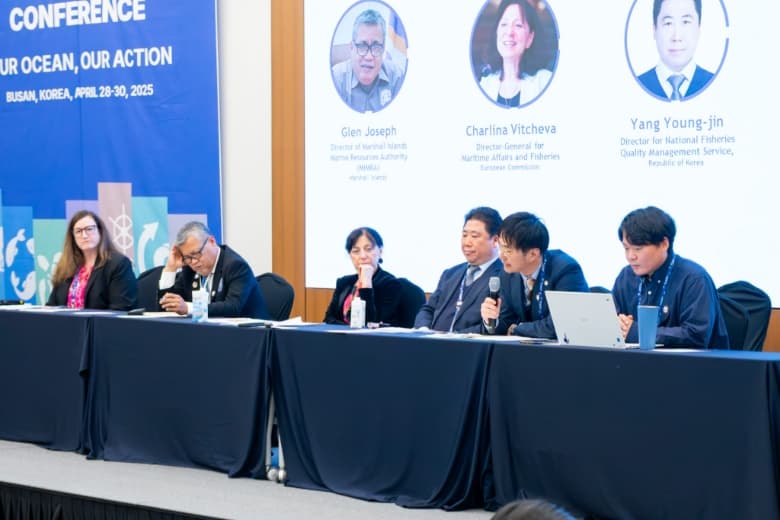
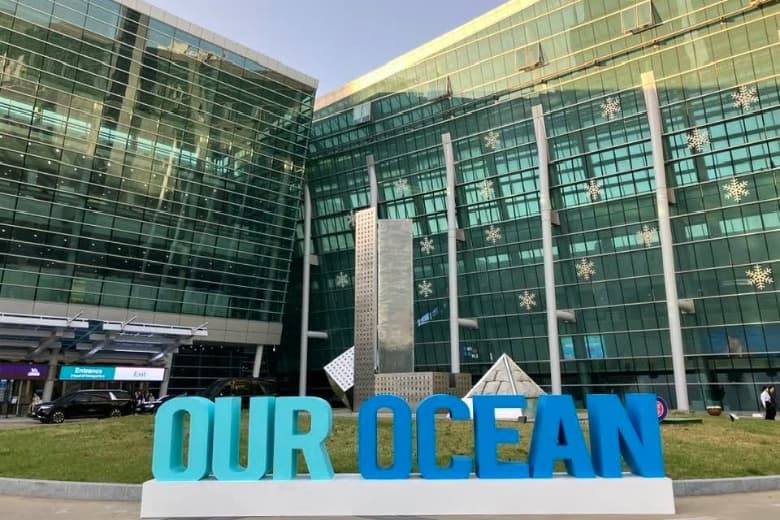
The Our Ocean Conference was held for the first time in East Asia, in Busan, ROK. The Fisheries Agency of Japan remarked that over 30% of all seafood consignments imported to Japan (by volume) is now covered by the Japanese import control scheme, namely under the Foreign Exchange and Foreign Trade Act (tuna) and the Act on Ensuring the Proper Domestic Distribution of Specified Aquatic Animals and Plants.
China officially became a party to the Agreement on Port State Measures to Prevent, Deter and Eliminate Illegal, Unreported and Unregulated Fishing (PSMA).
Thailand began drafting a legislation that requires companies to conduct human rights and environmental due diligence in their supply chains.
The Fisheries Division and the Research Commission on Fishery Policies of the Liberal Democratic Party of Japan submitted a set of recommendations to Prime Minister Ishiba and Minister Koizumi (in charge of agriculture, forestry and fisheries)(both at that time). The recommendations push for the formulation of a plan to make the seafood industry resilient, which would fundamentally review and change existing Japanese fishery policy in order to make the industry sustainable.
China started the process to significantly overhaul its Fisheries Law. This is the first time since 2000 for China to review this law and measures against IUU fishing are being considered.
ROK became one of the first member states of the 100% Alliance, committing to the sustainable management of 100% of the ocean areas under their national jurisdiction.
A bill that mandates businesses to conduct human rights and environmental due diligence was submitted to the ROK National Assembly.
The Financial Services Agency of Japan mandated that companies listed on the Tokyo Stock Exchange's Prime market with a market capitalization of JPY 3 trillion or more should disclose sustainability information in their securities reports starting from the fiscal year ending in March 2027.
Japan(in December) ratified the Agreement on the Conservation and Sustainable Use of Marine Biological Diversity of Areas Beyond National Jurisdiction (BBNJ Agreement).
Chefs for the Blue, a collaborative initiative of leading chefs in Japan, conducted Japan's first nationwide survey on restaurant seafood procurement. 1,300 non-anonymous responses were collected and the results were published in a recommendation letter to Minister Koizumi (in charge of agriculture, forestry and fisheries) and Director-General Mori (both at that time) of the Fisheries Agency.
In February 2025, members of a project to deliver on-the-ground voices of the industry to policymakers, launched by the Suisan Mirai Summit, made a petition to the Research Commission on Fishery Policies of the Liberal Democratic Party for increased budget allocation to fish stock assessments. Budget increase was reflected in the government’s Basic Policy on Economic and Fiscal Management and Reform in June 2025.
In September 2025, the project members submitted a recommendation to Shinjiro Koizumi, the then Minister of Agriculture, Forestry and Fisheries, and Director-General Hitoshi Fujita of the Fisheries Agency of Japan, for more science-based conservation of fisheries resources.
2024
(10th TSSS) Win the Mainstream: Nature-Positive, Ensuring Global Food Security and Respecting Human Rights
The FAIRR Initiative (FAIRR), a collaborative investor network, launched thirty-five institutional investors initiative called “FAIRRR Seafood Traceability Engagement” to demand improved traceability from seven major global seafood companies (including four Japanese companies).
Mizuho Financial Group became the first Japanese megabank to release a policy on the fisheries (including aquaculture) sector. The policy clearly states that overfishing, IUU fishing, and violations of human rights are investment risks. (Effective date: July 2024)
Developing a biodiversity policy: A technical guide for asset owners and investment managers, was released by the Principles for Responsible Investment (PRI).
The Toho Bank rolled out the Toho Sustainable Investment and Loan Policy, and became the first regional bank in Japan that has a financing and investment policy that covers seafood.
Food & Life Companies (F&LC) , known for the conveyor belt sushi restaurant chain Sushiro, established the F&LC Human Rights Policies.
The Taskforce on Nature-related Financial Disclosure (TNFD) announced that 320 companies have become “early adopters.” With 80 of these being Japanese companies, the country with the greatest number of early adopters in the world is Japan as of 2024.
Marubeni Group established its seafood procurement policy aimed at sustainable seafood procurement.
Izumisawa-Suisan acquired an ASC certification for coho salmon farming and the world’s first ASC certification for commercial masu salmon farming.
MEIHO Gyogyo Co., Ltd. becomes the first-ever partner of the Global Tuna Alliance from Japan.
Fukui Chuo Uoichi became the first in Japan to obtain ASC certification for freshwater trout.
Through an aquaculture improvement project led by the Japanese Consumers' Co-operative Union (JCCU) and their collaborators, black tiger shrimp farms in Java, Indonesia, became ASC-certified.
Maruha Nichiro Corporation (currently Umios corporation) has established its desired state (KGI) and achievement targets (KPIs) for 2030, as well as its seafood procurement policy, which aims to ensure the procurement of sustainable seafood.
“JAPAN UNI SUMMIT (Japan Sea Urchin Summit)” was held by Kitasanriku Factory and moova to discuss ocean issues such as vegetation loss in rocky-shore ecosystems and to take action with various stakeholders.
The Conservation Alliance for Seafood Solutions, a global community of over 200 NGOs and companies, issued corporate guidance on advancing environmentally and socially responsible seafood in multiple languages, including Japanese and Indonesian.
The Outlaw Ocean Project, a nonprofit investigative-journalism organization, revealed that seafood products processed by Chinese companies, using North Korean forced labor, were being distributed across North American and European markets. Companies in these regions and their supply chains had to urgently respond.
Following the release of a report by the Outlaw Ocean Project, 18 human rights organizations demanded seafood wholesalers and retailers to conduct follow-up investigations into the working conditions of workers from Uyghur and North Korea.
Seafood Legacy released A Decade of Sustainable Seafood Movement to look back on the footsteps taken so far.
Thirteen Japanese seafood companies and retailers, submitted a joint declaration with IUU Forum Japan to the Fisheries Agency of Japan, calling for stronger measures against IUU fishing and human rights issues.
The Western and Central Pacific Fisheries Commission (WCPFC) agreed at its 21st Regular Session to ease catch limits for Pacific bluefin tuna as stock recovery has shown good progress.
The Corporate Sustainability Due Diligence Directive (CSDDD) which requires companies and their subsidiaries and business partners to address environment and human rights due diligence came into effect in the EU.
More than 30 major retailers, industry groups and precompetitive coalitions from Asia as well as the US submitted a letter to the South Pacific Regional Fisheries Management Organisation (SPRFMO) to request for stronger measures to combat IUU fishing and protect workers' rights in the South Pacific.
Japan formulated the “Transition Strategies toward Nature Positive Economy.”
A commitment to end IUU fishing was included in the joint declaration of the Ninth Japan-China-ROK Trilateral Summit, which was held in ROK.
Chatham Fish, a platform for closed-door discussion on how the seafood industry can adapt to changes in the marine environment and become sustainable, was launched by the Umineko Sustainability Institute.
ROK has formulated a plan to improve the working conditions of migrant workers on distant-water fishing vessels in collaboration with NGOs such as the Environmental Justice Foundation, Advocates for Public Interest Law and the industry.
IUU Forum Japan, together with Patima Tungpuchayakul, who rescues workers from modern slavery in the seafood sector in Southeast Asia, submitted a joint statement to the Director-General of the Fisheries Agency of Japan, calling for a stronger legal system to prevent IUU fishing.
Taiwan revised its Distant Water Fisheries Act to regulate IUU fishing, explicitly granting the regulator the power to ban imports of fishery products from specific countries or regions.
Chefs for the Blue, a collaborative initiative of leading chefs, submitted policy recommendations to protect the future of our oceans to the Director-General of the Fisheries Agency of Japan. This was the first ever action of this kind taken by the Japanese culinary community.
At a series of meetings organized by the Fisheries Agency of Japan to promote proper seafood distribution, shark species were identified as candidate species to be additionally subject to Japan’s seafood import control scheme, due to their high risk of being associated with IUU fishing. Shrimp and albacore tuna were also highlighted as species of particular concern.
Suisan Mirai Summit (The Future of Seafood Summit) was held by Fisherman Japan and others with a passion for making fisheries industries sustainable.
NGO, Environmental Justice Foundation, published a report about IUU fishing and human rights abuse on vessels owned or affiliated with fisheries companies in Zhejiang Province, China.
2023
(9th TSSS) Achieving the 2030 Agenda: Sustainable Seafood Strategies for Japan and Global Food Security
Seafood Traceability Engagement, an initiative led by the FAIRR Initiative (FAIRR), a collaborative investor network, et al., was launched.
SeaBOS published the Impact Report.
Seafood Legacy published an introductory report on corporate responsibility to respect the rights of workers in the seafood supply chain for Japanese seafood companies.
During some meetings of a working group established by the Cabinet Office, Aeon and Seven & i Holdings made requests to the Japanese government to strengthen its import control rules under the Act on Ensuring the Proper Domestic Distribution and Importation of Specified Aquatic Animals and Plants: Aeon requested for the addition of rules to cover seafood imports with social risks, in particular, human rights violation risks; and Seven & i Holdings requested for the coverage of all major fish species.
Nissui Corporation issued the Nissui Group TNFD Report 2023, the first TNFD report from a leading Japanese seafood company.
The Kyokuyo Group publicized the results of its survey on seafood resources, which aimed to understand the status of fish stocks the group's procurement relies on and identify relevant issues as well as how to address these.
Mitsui & Co. Seafoods established their Marine Products Procurement Policy.
Yasutaka Suisan Farm and Hamasui Processing Plant, both members of the Ainan Fisheries Cooperative, obtained Japan's first BAP certification.
Global Tuna Alliance, a platform where supply chain companies gather and work for sustainable and responsible tuna fishery started working in Japan.
The Taskforce on Nature-related Financial Disclosures (TNFD) released “Recommendations of the Taskforce on Nature-related Financial Disclosures” for businesses to report their nature-related dependencies, impacts, risks and opportunities.
Nikkei Inc. and Nikkei Business Publications, Inc. launched the Nikkei Blue Ocean Forum focusing on SDG 14 aiming at conservation of the ocean environment and prosperity of the seafood industry.
The Agreement under the United Nations Convention on the Law of the Sea on the Conservation and Sustainable Use of Marine Biological Diversity of Areas beyond National Jurisdiction (BBNJ Agreement) was adopted at the UN. This is the first global legally binding agreement to protect the high seas.
The Corporate Sustainability Reporting Directive (CSRD) which requires companies to disclose their environmental and social impacts and governance came into effect in the EU.
The Coalition for Fisheries Transparency was launched as a global platform for civil society leaders to pursue fisheries transparency to address issues around IUU fishing and human rights violations.
The government of the Republic of Korea became the first in Asia to join the IUU Fishing Action Alliance.
The Japanese government released the Guidance on Sustainable Management for the Food Industry and the Guidebook for Respecting Human Rights in Food Enterprises.
2022
(8th TSSS) Designing the Blue Ocean Strategy for the Seafood Industry: Labor Rights, Biodiversity, and Climate Change—the Nexus of Sustainable Seafood Movement
Maruha Nichiro Corporation(currently Umios corporation) issued Japan’s first blue bond and secured 5 billion JPY (34 million USD) .
Hilton made incremental progress on sourcing from MSC and ASC certified fisheries at Hilton, with Japan, South Korea and Micronesia becoming the first region to achieve 25% sustainable seafood target in 2022. ◀ It reached 32% in 2023.
Seven & i Holdings revised “Seven & i Group Sustainable Sourcing Principles and Policies.”
The Japanese government enforced the Act on Ensuring the Proper Domestic Distribution and Importation of Specified Aquatic Animals and Plants, which aims to prevent seafood products sourced by IUU fishing from entering the Japanese market.
The Japanese government developed the “Guidelines on Respecting Human Rights in Responsible Supply Chains” which urge all companies to adopt human rights policies,conduct human rights due diligence, and establish grievance mechanisms.
At the 15 Conference of Parties to the UN Convention on Biological Diversity(COP15), the Kunming-Montreal Global Biodiversity Framework was adopted and the "30 by 30" target was set to conserve at least 30% of the land and sea by 2030 to achieve a nature-positive world.
The World Trade Organization (WTO) adopted the Agreement on Fisheries Subsidies which lays out rules for prohibiting fisheries subsidies that lead to excessive fishing capacity and overfishing.
The IUU Fishing Action Alliance was jointly established by the governments of Canada, the United Kingdom and the United States as a platform to end IUU fishing.
The second UN Ocean Conference took place and the government of Japan talked about its domestic and international efforts for fisheries sustainability, including measures against IUU fishing.
The Act to Promote Environmental Burden Reduction Activities for Establishment of an Environmentally Harmonized Food System came into effect in Japan.
Sailors for the Sea Japan, in collaboration with the Tokyo Metropolitan Government, released the “Tokyo Edition” of the sustainable seafood list “Blue Seafood Guide.”
Ghost Fleet, a documentary film which highlights modern slavery at sea, was released in Japan.
2021
(7th TSSS) Build Blue Economy Toward 2030 Changing Japanese Seafood Industry by DX and ESG Investment
Thai Union secured nearly 11.5 billion THB (330 million USD) through its first sustainability-linked loan. Mizuho Bank, MUFG Bank, and Bank of Ayudhya were the mandated lead arrangers and bookrunners (MLABs) and sustainability coordinators.
British think tank NGO Planet Tracker released Against the Tide, a report on a study of the financial situation of 70 seafood companies in the seafood industry that are listed on the Tokyo Stock Exchange.
In response to its development of the “Consumer Co-op 2030 Environmental Sustainability Policy,” the Japanese Consumers’ Co-operative Union adopted the “2030 Goals for CO・OP Brand Products” and released the “Basic Policy on Responsible Procurement.”
Mitsubishi Corporation and Toyo Reizo revised their Tuna Procurement Guidelines. In addition to the originally covered bluefin tuna species, tropical tuna species were included in the scope of the revised guidelines as well. Human rights due diligence was also added in its scope.
Kibun Foods announced the Sustainability Objectives by 2030. These are based on the company’s Sustainability Policies, sustainable procurement of raw materials for the first time in the surimi industry.
Global Seafood Alliance*, which manages Best Aquaculture Practices certification and other certifications, hires a staff in Japan. *Called “Global Aquaculture Alliance” at the time.
2020
(6th TSSS) Sustainable Seafood and the Blue Economy in the New Normal
Maruha Nichiro Corporation(currently Umios Corporation) made the results of its first survey on raw materials and products handled by its group companies public. This survey was conducted for conservation and sustainable procurement of seafood resources.
Usufuku Honten acquired the world’s first MSC certification for Atlantic bluefin tuna.
Seafood Legacy Times, Japan's only media outlet dedicated to sustainable seafood, was launched to keep the inspiration from the annual TSSS effective all year round.
Amendments that were made to the Fishery Act of Japan to ensure the sustainable use of seafood resources (for the first time in 70 years in 2018) came into force.
The Japanese Government formulated the National Action Plan on Business and Human Rights (2020-2025).
The European Union (EU) announced the Farm to Fork Strategy, aiming for sustainability throughout food systems, from food production to consumption.
Global Fishing Watch published a study on large-scale IUU fishing of squid in North Korean waters by Chinese vessels.
2019
(5th TSSS) For the Coming Tokyo 2020 Olympics: Sustainable Seafood as Essence for SDGs and ESG management
British think tank NGO Planet Tracker published the report Perfect Storm, which evaluated the sustainability risks of 41 major seafood companies in Japan.
The first ever Seafood Stewardship Index (SSI) was presented by the World Benchmarking Alliance (WBA), a non-profit organisation assessing corporate sustainability performance, SSI ranks the world's top 30 seafood companies based on environmental and social sustainability. (The second edition was published in 2021, and the third one was in 2023).
Seven & i Holdings announced the launch of Green Challenge 2050, the company’s environmental initiative. This aims to accelerate the reduction of the company’s environmental footprint throughout its supply chain and network of stores in Japan, thereby contributing to passing on a healthy planet to future generations.
The Certification and Rating Collaboration published the report Sustainable Seafood: A Global Benchmark, which shows the percentage of sustainable production in global wild-caught and farmed seafood.
MEL Ver. 2.0 (updated since then), the certification standards of Marine Eco-Label Japan (MEL), was recognized by the Global Sustainable Seafood Initiative (GSSI).
The Japan Sustainable Seafood Award was launched to facilitate the sustainable seafood movement in Japan.
2018
(4th TSSS) New Global Trends and Initiatives in Japan
The United Nations Environment Programme Finance Initiative (UNEP-FI) established the Sustainable Blue Economy Finance Principles as the world’s first guiding framework for investors, banks and insurers to finance a sustainable blue economy.
Nippon Suisan Kaisha (now Nissui Corporation) conducted a survey on the sustainability of seafood resources procured by the Nissui Group and publicized its results. This was the first report of its kind to be released by a major Japanese seafood company. (A second report was released in 2021, followed by a third one in 2024.)
Sales of MSC/ASC-certified seafood at Aeon Retail in fiscal year (FY) 2018 exceeded 10 billion yen, which is an increase of 20% from 8 billion yen in FY 2017.
Panasonic Corporation became the first company in Japan to offer MSC/ASC-certified seafood menus at their staff cafeteria.
The Hong Kong Sustainable Seafood Coalition (HKSSC) was established and has partnered with industry members to advance sustainable seafood markets through good sourcing practices.
The High Level Panel for a Sustainable Ocean Economy was launched and heads of state of 12 maritime nations came together to discuss how to achieve the SDGs.
The National Oceanic and Atmospheric Administration (NOAA) of the United States started implementing the Seafood Import Monitoring Program (SIMP) which requires importers of 13 species groups to collect, report and store key data.
Friends of Ocean Action was launched by the World Economic Forum and leaders of global companies, NGOs and other organizations that focus on seafood sustainability.
2017
(3rd TSSS) Japan’s Challenge Starts with Fish: Beyond 2020 Tokyo Olympics, Building the Legacy and Achieve the SDGs Goals
The Government Pension Investment Fund (GPIF) of Japan started making environmental, social and governance (ESG) investments.
The Global Dialogue on Seafood Traceability (GDST) was launched to establish global standards for seafood traceability with participation from companies in the global seafood supply chain.
Mitsubishi Corporation adopted the Bluefin Tuna Sustainable Sourcing Policy. This was made by revising their existing tuna sourcing policy in light of the recovery of the Atlantic bluefin tuna stock and by adding Pacific and southern bluefin tuna.
The Aquaculture Stewardship Council (ASC), which certifies responsible aquaculture seafood products that have minimal impact on the environment and society, established a base in Japan.
Japan ratified the Agreement on Port State Measures to Prevent, Deter and Eliminate Illegal, Unreported and Unregulated Fishing (PSMA).
To make policy recommendations to eliminate illegal, unreported, and unregulated (IUU) fishing, IUU Forum Japan was established as a platform for civil society organizations.
The first United Nations Ocean Conference was convened to facilitate the implementation of SDG 14 to “conserve and sustainably use the oceans, seas and marine resources for sustainable development.”
Some of Japan's top chefs and a food journalist formed Chefs for the Blue to work together for ocean sustainability.
2016
(2nd TSSS) Japan’s Challenge Starts with Fish: Looking Toward 2020 for Sustainable Procurement & Food
The Seafood Business for Ocean Stewardship (SeaBOS) was launched as an initiative whereby the world's largest seafood companies and scientists collaborate.
The Shizugawa Branch of Miyagi Prefecture Fisheries Co-operative acquired Japan’s first ASC certification for oyster farming.
Kaiko Bussan, in Funabashi, Chiba, launched Japan’s first Fishery Improvement Project (FIP) for its Japanese sea bass fishery in Tokyo Bay.
2015
(First TSSS) Japan’s Challenge Starts with Fish: Sustainable Procurement and Future of Our Food Toward 2030
Seafood Legacy was established with the purpose of passing on the abundance and sustainability of seafood offered by the world’s oceans, which symbolizes the connections among the marine environment, economy and our society, to future generations.
The world's largest case of seafood smuggling to date was detected and prosecuted in China. (480-million-USD worth products including salmon and shrimp.)
Human rights violations (forced- and/or child-labor cases) in the shrimp supply chain of major seafood processing companies were revealed.
BLUE, Japan’s first MSC- and ASC- certified independent restaurant opened.
The Sustainable Development Agenda, containing the 17 Sustainable Development goals (SDGs), was adopted by consensus at the United Nations Sustainable Development Summit 2015.
Global Fishing Watch, which analyzes the activity of fishing vessels using satellite imagery and Al, with the aim to improve ocean governance, was launched.
Produced by Seafood Legacy Co., Ltd.